Kibbe Body Type Quiz: Find Your Type in 2 Minutes
Are you Dramatic, Natural, Classic, Gamine or Romantic? This Kibbe body type quiz looks at your lines, your features and how clothes sit on you, then gives you styling tips for your family.
Quiz questions
1. Look at yourself in a mirror from a few steps away. Your overall shape reads as...
2. How do your shoulders look?
3. Which description fits your face best?
4. A plain fitted blazer on you looks...
5. Which jeans fit you best without any alterations?
6. Your hands and feet are...
7. Which outfit makes you feel most like yourself?
8. Which compliment do you hear most?
9. How tall are you, roughly?
10. Pick a fabric you love wearing.
All possible results
Your result
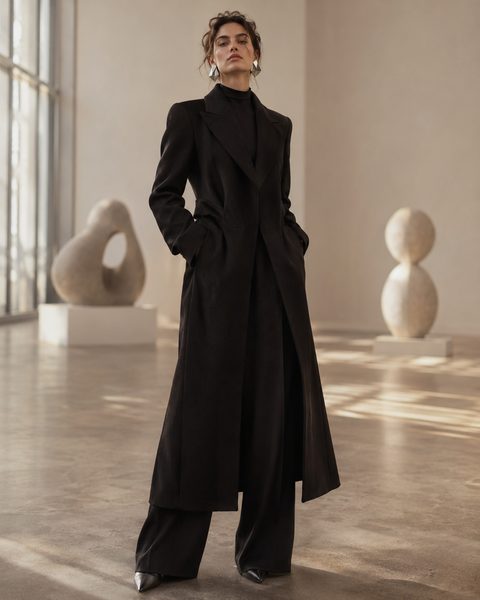
Dramatic
Long, sharp and made for bold lines.
- Striking
- Vertical
- Angular
Your body has a strong vertical line and sharp angles. You look taller than you are, your features are bold, and clothes with long, clean lines suit you best. In Kibbe's system that's Dramatic, the most yang of all the families.
Try: long coats, sharp tailoring, column dresses, strong shoulders, monochrome outfits and bold, geometric jewelry. Go easy on frills, tiny prints and fussy details. They can look lost on you.
Your result
Natural
Relaxed, a little broad and effortlessly cool.
- Relaxed
- Open
- Athletic
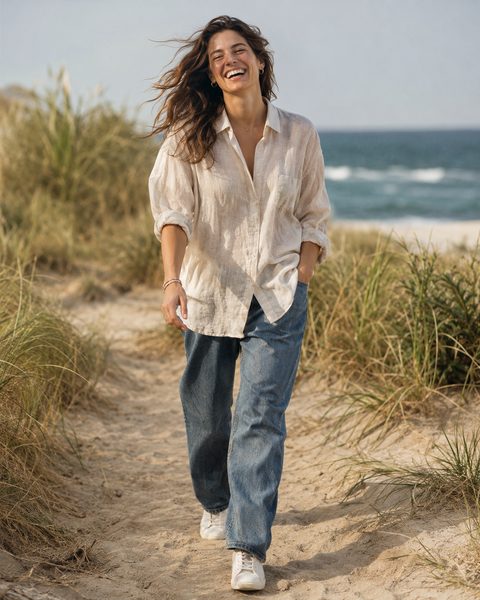
Your frame has a slightly broad, blunt quality: maybe square shoulders, wide hands or an athletic build. You look your best when clothes are relaxed and unfussy. In Kibbe's system that's Natural.
Try: linen, denim, chunky knits, relaxed trousers, oversized shirts, open necklines and textured or natural fabrics. Very stiff, tight or overly precise outfits can feel like a costume on you. Let things drape and move.
Your result
Classic
Balanced, symmetrical and quietly elegant.
- Balanced
- Polished
- Moderate
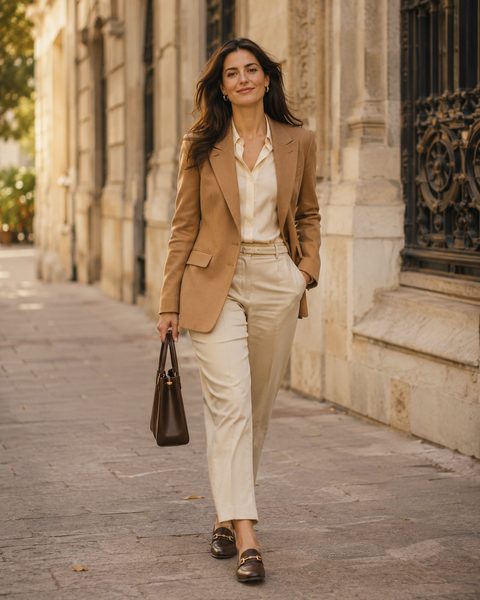
Nothing about your frame is extreme. You're not very long or very short, very sharp or very round. Your features are even and in proportion. In Kibbe's system that's Classic, a near-perfect balance of yin and yang.
Try: tailored but not stiff pieces, matching sets, neat trousers, knee-length skirts, smooth fabrics and simple, refined jewelry. Avoid anything very oversized, very tiny or very dramatic. Your look is polished and timeless.
Your result
Gamine
Small, lively and full of contrast.
- Playful
- Compact
- Contrasting
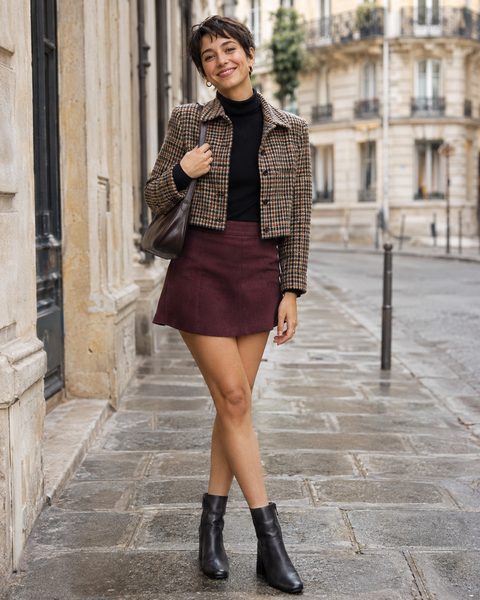
You're on the petite side and you mix sharp and soft: maybe a pointed chin with round eyes, or a compact frame with angular shoulders. You look lively, and outfits that are a little playful and broken up into pieces suit you. In Kibbe's system that's Gamine.
Try: cropped jackets, short skirts, slim trousers, separates in contrasting colors, checks, stripes and small graphic prints. Long, flowing, single-color outfits can swamp you. Keep lines crisp and short.
Your result
Romantic
Soft, rounded and made for drape.
- Soft
- Curvy
- Delicate
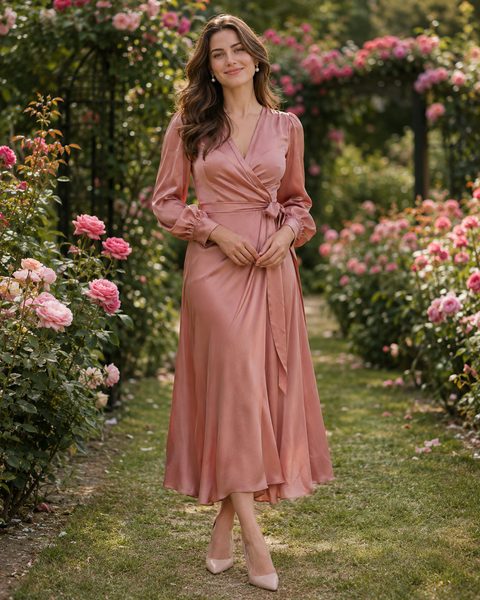
Your frame is soft and rounded, with curves and full features, and you tend to look shorter than you are. Soft fabrics and outfits that follow your shape suit you far better than stiff tailoring. In Kibbe's system that's Romantic, the most yin of the families.
Try: wrap dresses, soft blouses, defined waists, silk, velvet and jersey, rounded necklines and delicate, detailed jewelry. Very boxy, stiff or sharply angular pieces fight your shape. Go for drape and curve.
What is the Kibbe body type system?
The Kibbe system was created by American stylist David Kibbe in the 1980s and became popular again thanks to style communities online. Instead of fruit shapes or measurements, it looks at your whole look: your bone structure, the lines of your body and your facial features. Then it sorts that look somewhere on a scale from yang (sharp, long, angular) to yin (soft, rounded, delicate).
The point isn’t to judge your body. It’s the opposite. Kibbe believed that every body already has a harmony, and that clothes should follow it instead of trying to change it. Once you know your type, shopping gets a lot easier.
The five Kibbe families
- Dramatic: long, sharp and vertical. Think bold, clean lines.
- Natural: slightly broad and blunt. Think relaxed and unfussy.
- Classic: balanced and symmetrical. Think polished and refined.
- Gamine: petite with a mix of sharp and soft. Think playful and broken up.
- Romantic: soft and rounded. Think drape, curve and detail.
In the full system there are thirteen types, because most families have a “soft” and a “flamboyant” or “dramatic” version, for example Soft Natural and Flamboyant Natural. This quiz finds your family first, which is the most useful step. Once you know it, you can read about the sub-types and see which one feels more like you.
How this quiz works
There are ten questions about your frame, your features, how clothes fit and which outfits you feel best in. Each answer points to one family, and every family can be reached by exactly eight answers, so none of them is favored. The family with the most points is your result. If two are tied, you’ll see the one listed first.
Answer from how you actually look and how clothes actually sit on you, not from how you’d like to look. It helps to stand in front of a full-length mirror, or to look at a few honest photos taken from a distance. Your answers stay in your browser and are not stored anywhere.
Height is a clue, not a rule
A lot of people get confused by height. In Kibbe’s system it matters less than how tall you look. Someone who is 5’5″ with long bones and a sharp line can read as tall, while someone who is 5’7″ with soft curves can look shorter. That’s why the quiz asks how tall you look as well as how tall you are, and why it uses several questions about lines and fit instead of a single measurement.
Common mistakes when typing yourself
The first mistake is confusing weight with type. Your Kibbe family is about your bone structure and lines, so it doesn’t change if you gain or lose weight. A Dramatic stays Dramatic. The second mistake is typing by style preference. You might love romantic dresses and still be a Natural, and that’s fine. Kibbe is about what flatters your lines, not what you’re allowed to wear.
The third mistake is overthinking it. If two results both feel right, try a few outfits from each and ask a friend which looks more like “you”. Your eyes and the people who know you are often better judges than any measuring tape.
How to use your result
Start small. Pick one or two pieces from the “try” list in your result and see how they feel. Look at the cut and fabric of the clothes you already reach for most: chances are they already match your family. Then save outfit ideas on Pinterest by searching for your type, for example “soft classic outfits” or “flamboyant gamine style”.
Above all, treat your result as a starting point. Fashion is meant to be fun, and the best outfit is still the one you feel great in.